Designing 0-1 conversational AI-platform for 150k+ investors

Designing 0-1 conversational AI-platform for 150k+ investors

The Average Joe had built something special, a financial newsletter that 150,000+ people trusted for stock market insights and investment guidance. Their mission was clear: help the modern generation live their best financial life through education and motivation. But they had a bigger vision. What if instead of waiting for the next newsletter, users could ask questions whenever they wanted? What if the AI could analyse their portfolio, interpret market movements in real-time, and offer personalised insights based on actual stock market and investment behaviour?

Role

Founding Product Designer

Responsibilities

Product & Design Strategy, Product Design, UX Research, Usability Testing, Prototyping, Design System

Deliverables

Web Design, Mobile Web

Timeline

3 months

Team

Dami / Product Designer

Victor / Founder

Fabio / Product Manager

Khel / Frontend

Niko / Backend

I joined as the sole designer at a critical inflection point. The team had a hard deadline, three months to go from concept to friends and family testing. There was no time for traditional user research cycles or extensive testing. Every design decision had to be informed by my understanding of the existing newsletter, the audience, competitive/market analysis, and collaboration with the cross-functional team. This meant working fast and decisively. I'd present designs in our stand-ups, get immediate feedback from engineering and product, iterate quickly, and move to the next.

📣 Due to NDA restrictions, key company information have been omitted in this case study.

Setting the Stage

What happens when a newsletter company serving 150k+ users pivots to become an AI platform for stock market insights? You make sure complex AI agent orchestration translates into an experience that feels simple, trustworthy, and easily customisable, without losing traction while continuing to grow.

The brief: 3 months to build a complete platform (web and mobile) that handles big data, looks aesthetically pleasing yet minimal, and ships fast enough to not bottleneck growth. The pressure was intense, but it earned me the trust to make bold calls, from using Shadcn as the design system for quick implementation, to revising flows or scrapping the inherited data-heavy approach entirely. The team saw the reasoning immediately, and we moved quickly.

Thankfully, the team served as my de facto testers. If they found something confusing or over-complicated, our users definitely would too. This constraint forced immediate clarity: we couldn’t hide behind “we’ll test this later.” Every design decision had to be defensible in the moment.

Understanding the Landscape

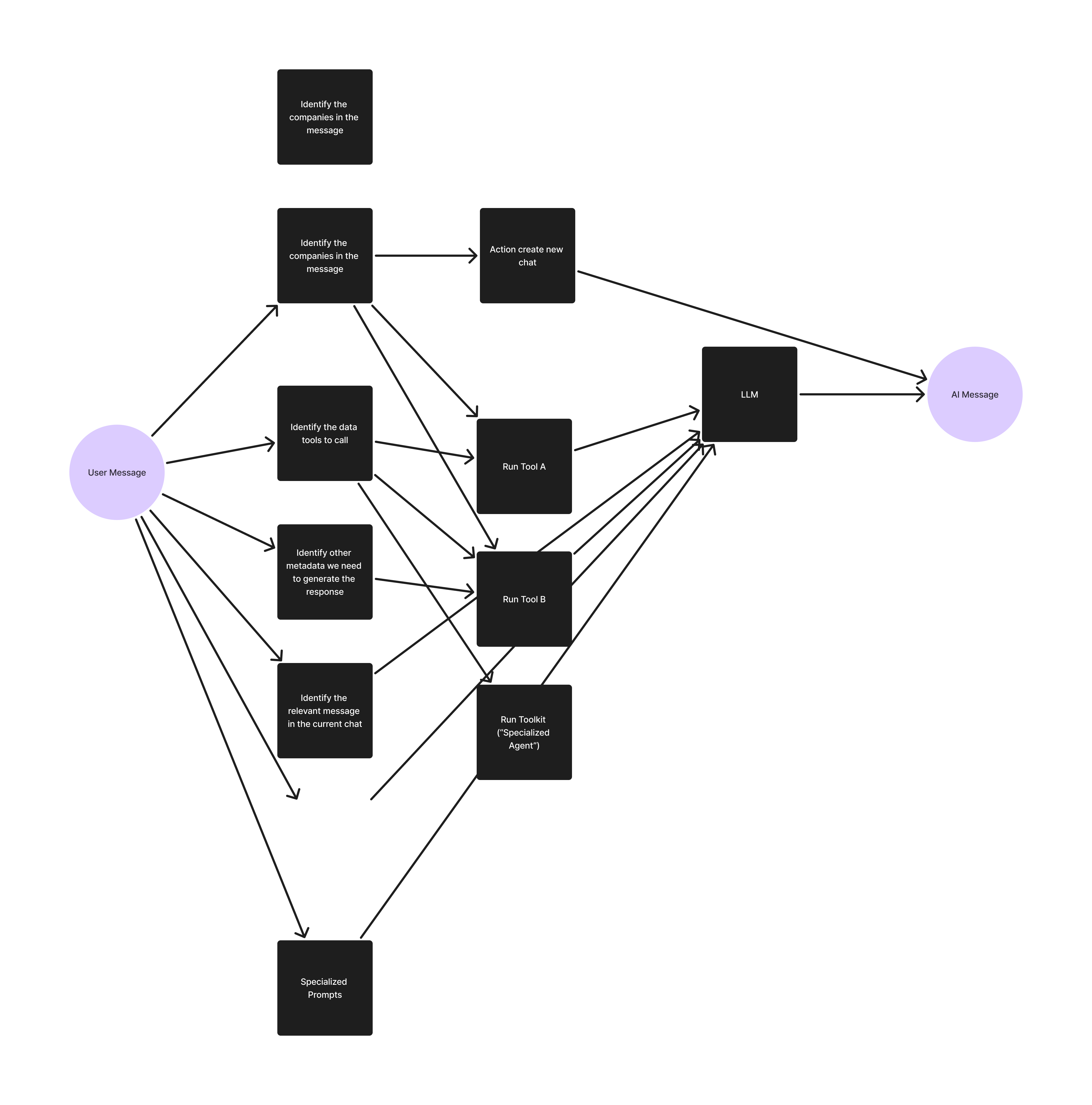
Before jumping into solutions, I needed to understand what we were really building. This wasn't just a chatbot like ChatGPT, this was a sophisticated financial intelligence system with multiple AI agents working together. The architecture was fascinating. When a user asked a question, an orchestrator agent would analyse the query, determine which specialised agents to activate (market data, portfolio analysis, news, technical indicators), coordinate their responses, and synthesise everything into a coherent answer. Each agent had access to different data sources, APIs, and reasoning capabilities. This meant I wasn't designing for one AI but, it needed to feel like a single, intelligent advisor.

I joined with zero understanding of how LLMs worked, how agents orchestrated tasks, or why certain queries took longer than others. Understanding at least 30% of the common constraints fundamentally shaped my design decisions.

The User Reality

I also analyzed the existing newsletter audience. They were mostly millennials and new investors who wanted to understand the market without drowning in complex data. They trusted the newsletters because the content broke down complex topics into digestible, actionable insights. The interface needed to maintain that clarity while giving them control and flexibility over how the information is consumed.

The Inherited Design

Looking at previous wireframes, I could see where things could be improved which included: information architecture and visual hierarchy. Data screens seemed dense and text-heavy, making it difficult for to quickly scan and prioritise the most important insights. Also, the visual design lacked a consistent design system, which would be important not only for user experience but, building trust by ensuring the platform felt intuitive and easy to use, especially when dealing with complex data.

Slide 1
Slide 2
Slide 3

The Outcome

Rather than just redesigning what existed, I identified critical gaps in the user experience and designed features that would make the platform genuinely useful for daily investing workflows.

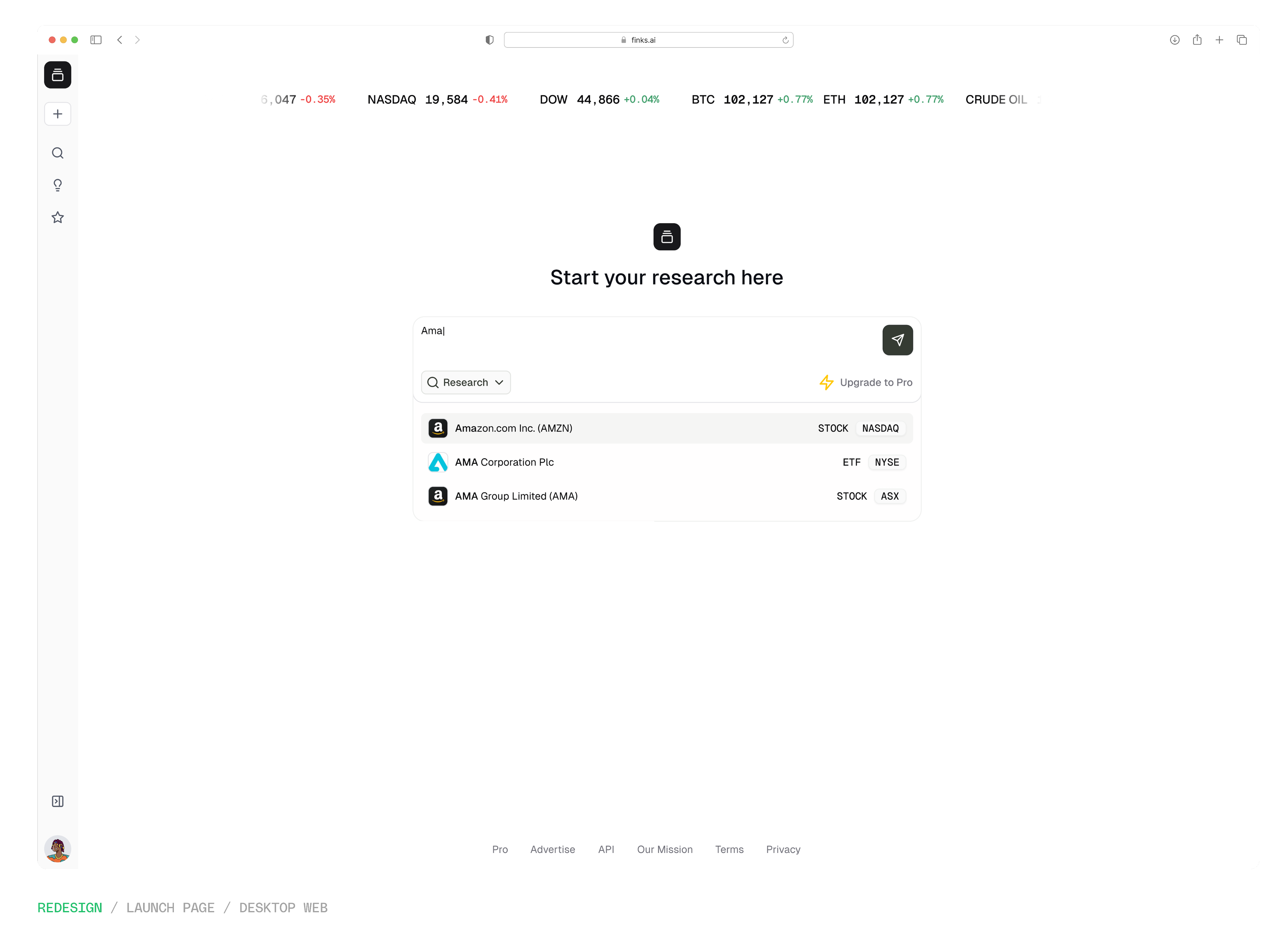
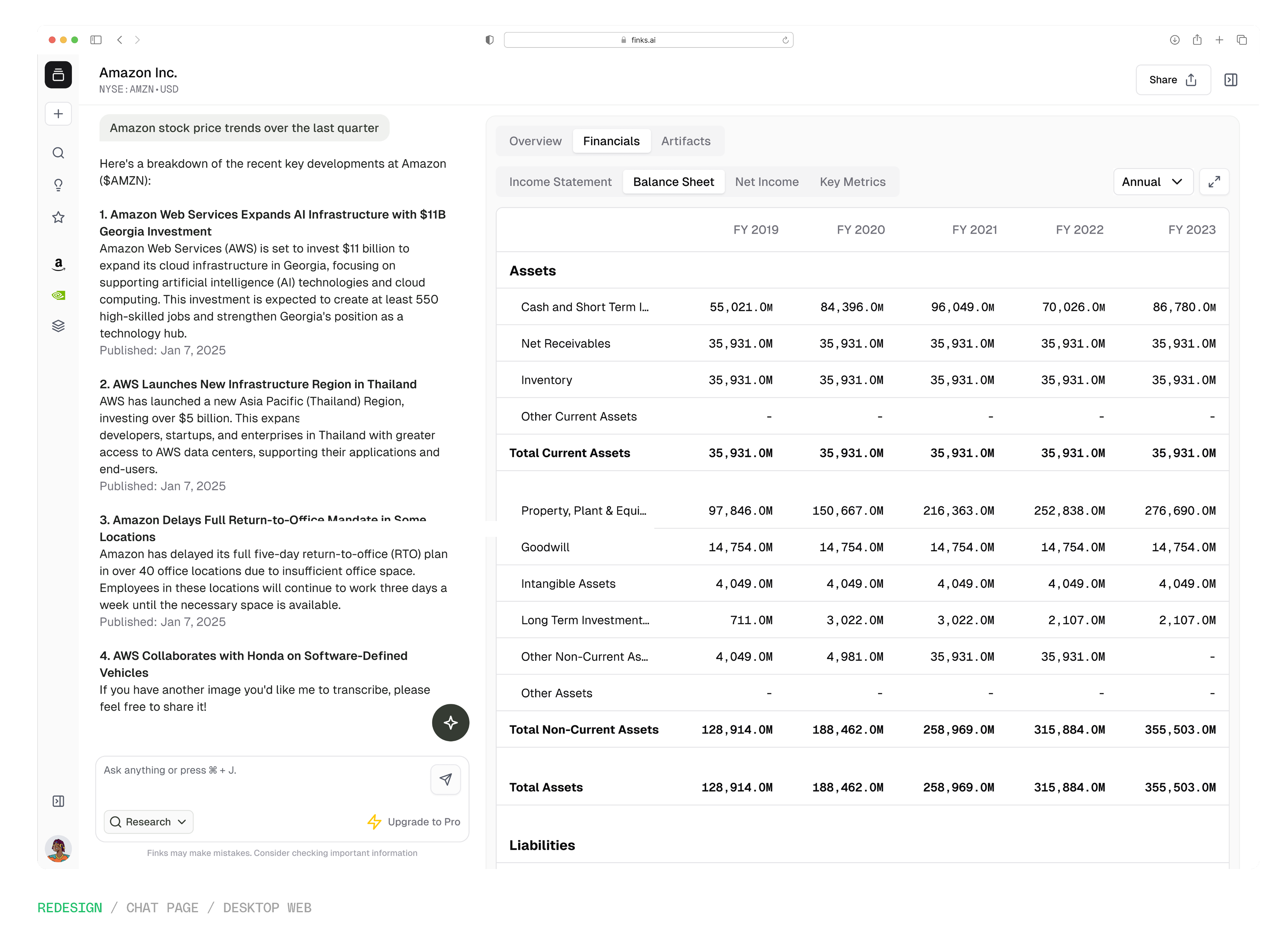
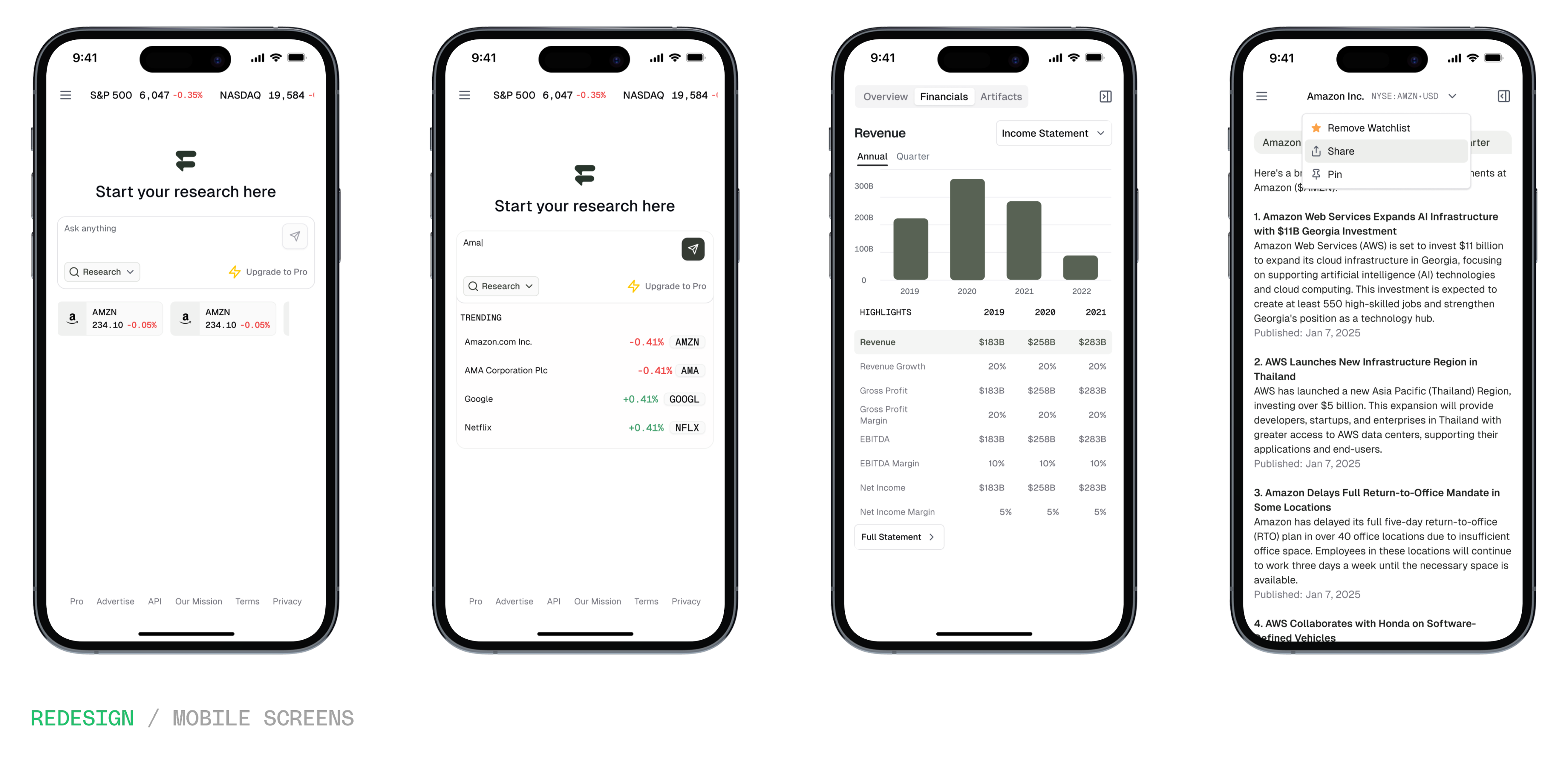
I added a persistent ticker to the launch screen for constant market monitoring. Investors don't just check markets once, they glance at it regularly. The ticker shows major indices, trending stocks, and user watchlist items, letting them stay oriented without opening multiple tabs. It transforms the platform from a Q&A tool into a companion.

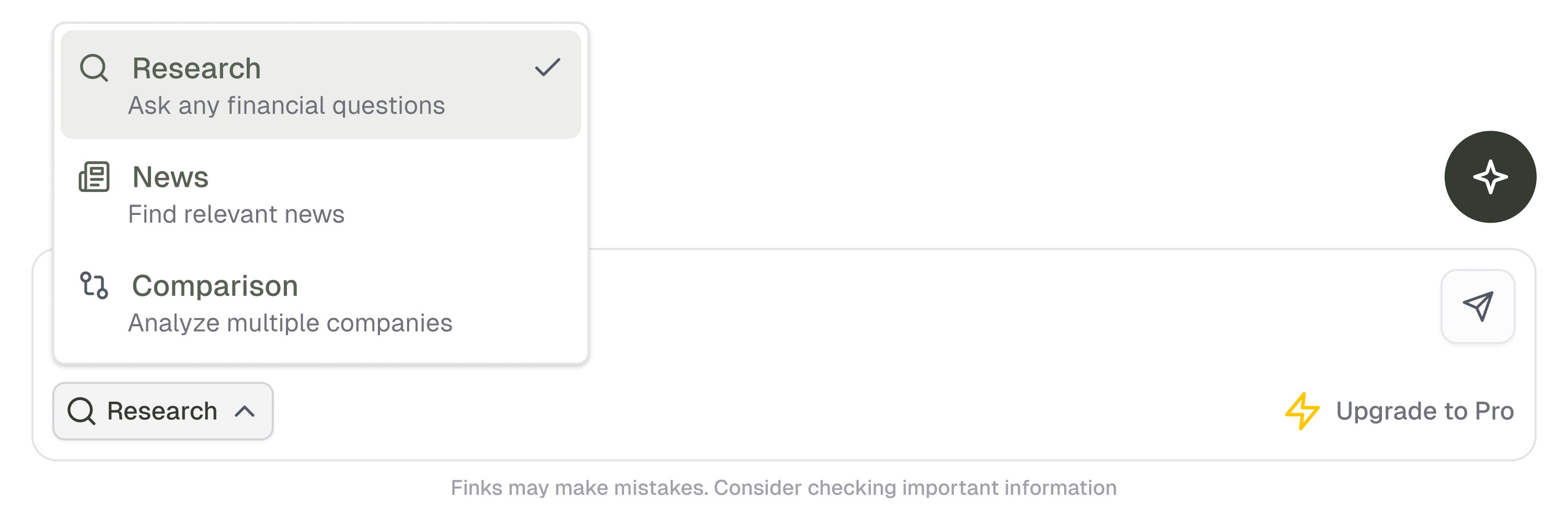
Not all questions are the same. Asking "What's the latest Tesla news?" requires different processing than "Compare Tesla vs. amazon fundamentals." Users can select modes before asking or let the AI auto-detect based on query patterns. This made responses more predictable and relevant to intent.

When the AI generates charts, tables, or analysis, it was important for users to be able to reference them while continuing the conversation. we also made sure that Users could customise which metrics are in view, resize columns, and save preferred configurations. The sidebar could be docked as well, adapting to different workflows, from casual viewing to in-depth analysis.

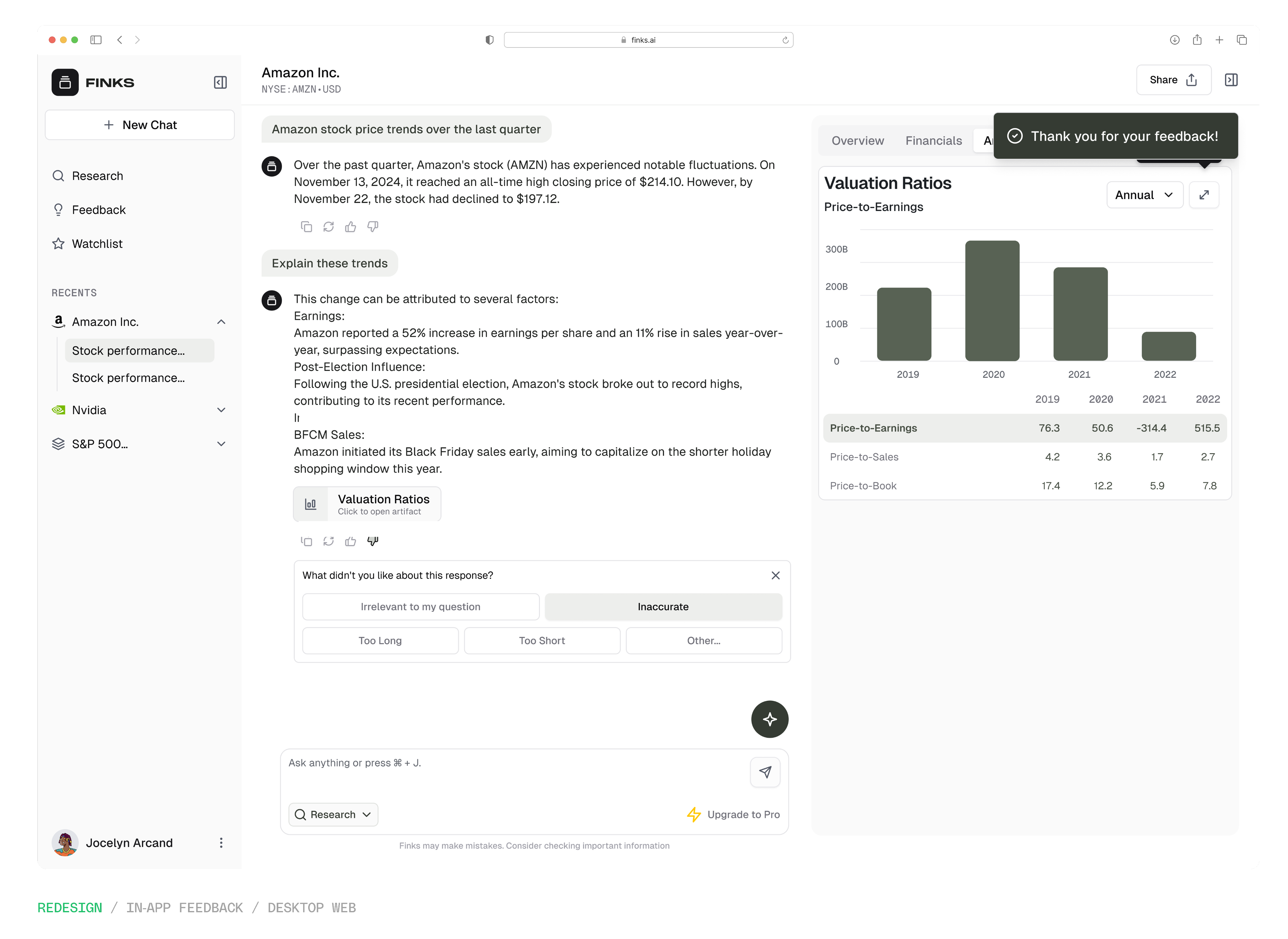
it was important to follow familiar patterns, the in-app feedback was one of them. it created an immediate feedback loop for the friends and family testing phase and beyond.

Mobile-Specific Considerations

One of my discoveries was that a good number of beginner investors check their stocks or market information on-the-go, it was important that the mobile UX wasn’t just a compressed version of the web version. It had to be designed and optimised for how people actually use regular apps: quick checks between meetings or daily activities, panic queries during market volatility, or portfolio monitoring throughout the day.

Design Decisions I'm Proud Of (Well, some of them 😄)

Customisable Financial Tables: I redesigned the entire data viewing experience to be adaptable to different use cases and screen sizes. Column widths could be resized, panels could be expanded or collapsed, and the entire interface adapted to how much information density each user preferred. Power users could see everything at once; casual investors could keep it minimal.


Status-Aware Input Prompts: This is something that’s often overlooked but, the chat input placeholder text changed based on context for example after user mentions a stock, the placeholder changes to "Ask more about AMZN” or after showing requested information, "What else would you like to know?". It’s a small detail, but it reinforced possible actions users could do next.


Smart Defaults for Time Periods: Financial data has dozens of time period options (1D, 5D, 1M, 3M, 6M, YTD, 1Y, 5Y, MAX). Overwhelming. I designed smart defaults based on query intent, Users could always change periods, but starting them in the right context reduced friction and improved understanding.

Reflections

This project pushed me in ways I didn't expect. Working across time zones, with team members in Toronto, Vancouver, and the Philippines, meant I couldn't rely on synchronous feedback loops. This made me more explicit in my design rationale, and proactive in anticipating edge cases. The async nature actually made me a better designer, everything had to be clear in Figma comments, documented in specs, or captured in Loom videos. This discipline meant fewer misunderstandings and faster implementation despite the distance.

What surprised me most: How much financial domain knowledge I had to learn. I couldn't design a balance sheet view without understanding what balance sheets meant or what it was showing. I couldn't create comparison interfaces without knowing which metrics actually mattered for different industries. The first month I spent probably 30% of my time just learning enough finance to design intelligently.


What I'd do differently: I would have pushed harder for at least minimal user testing, even just 3-4 sessions. While the team gave valuable feedback and thoughts, we were too close to the product. Some assumptions we made, like how users would discover the mode switching, or which metrics they'd want visible by default, could have been validated or invalidated with external input.

This was my first time designing an AI product, and it taught me that AI design is really just good product design with new constraints. Users still want clarity, control, and confidence. The medium is different, conversational interfaces instead of forms, responses instead of page loads but the principles remain, understand the problem, respect the user's mental model, remove friction, build trust.

👁️ For optimal viewing, please view this case study on a larger screen.